
Nashville has a habit of turning first-time visitors into repeat travelers.
Come once for Broadway and the live music, and the next trip might be built around a Titans weekend, a concert at the Ryman, a family getaway or simply having more time to explore the city beyond downtown.
For people who travel regularly, repeat visits can lead to a bigger question: could vacation ownership make sense?
In this context the Nashville timeshares and vacation clubs offer a different way to plan future trips. Some provide access to a particular property, while modern points-based clubs can give owners a choice of resorts and destinations. The appeal can be easy to understand for travelers who already know vacations will remain an important part of their lifestyle.
The commitment deserves more consideration than an ordinary hotel reservation, however. Before buying vacation ownership in Nashville, travelers should understand how the product works, what they will pay over time, their rights under Tennessee law and what support exists after the sale.
How do timeshares and vacation clubs work?
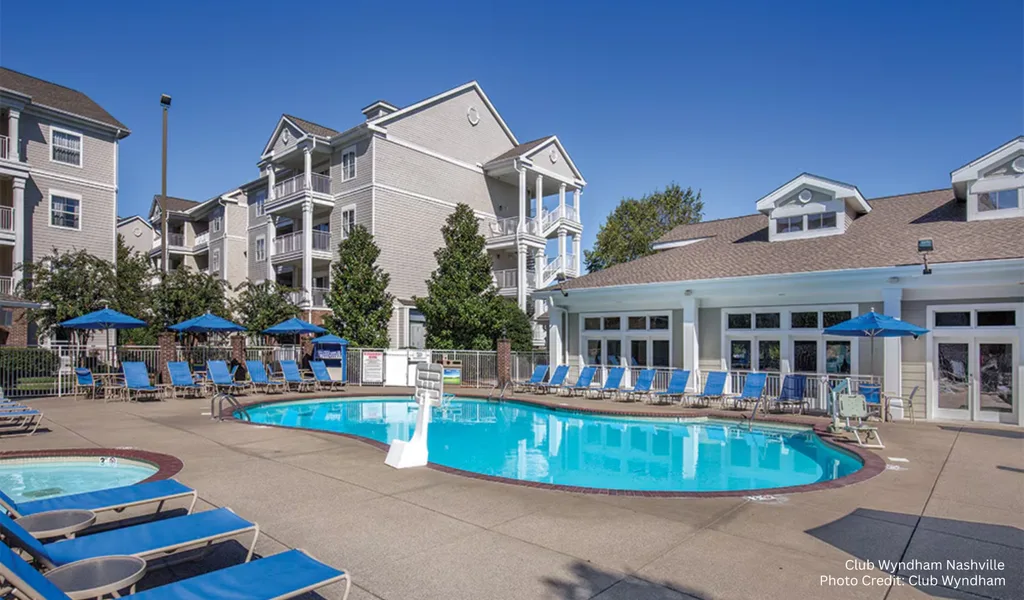
There is no single model for vacation ownership.
A traditional timeshare may provide use of a particular property during a specified period. Other products use points, allowing owners to reserve stays across a collection of participating resorts. Vacation clubs can operate differently again, so the terminology alone should never determine a buying decision.
Established points-based clubs have helped move the category toward greater destination choice. Club Wyndham, part of Travel + Leisure Co., is one example of a major vacation ownership brand built around a points system and a network of resort destinations rather than the idea of returning to one identical room for one fixed week every year.
For a prospective buyer, the important questions are practical. What exactly are you purchasing? How are points allocated? When can reservations be made? How does availability work? What happens to points you do not use?
Consider those answers against the trips you actually take.
If Nashville is a favorite city but you also spend summers near the beach and occasionally head to the mountains, a broader resort network may appeal more than a product centered on one destination. If you mostly book spontaneous weekend trips, reservation windows and availability may matter more.
The right model is the one that complements your existing travel habits rather than requiring you to reinvent them.
What should you expect at a vacation ownership presentation?

Vacation ownership presentations are sales environments, and travelers should approach them with the same confidence they would bring to any significant purchase.
Listen to how the program works, but ask specific questions.
- How much is the initial purchase?
- Which recurring fees apply?
- Can maintenance fees change?
- How many points would a Nashville stay typically require during the periods you prefer to travel?
- What about a larger unit for a family vacation?
Ask to see how reservations work rather than relying on general descriptions of flexibility.
A reputable provider should be able to explain its product clearly and direct prospective owners toward written information about costs, benefits and obligations. Companies with a long history in vacation ownership also have an opportunity to educate buyers rather than leaving them to piece together how the product works after signing.
Club Wyndham’s position within Travel + Leisure Co., whose vacation ownership businesses have evolved over decades, provides useful context here. Its current owner ecosystem includes educational material covering reservations, ownership information, account management and consumer protection. For buyers comparing clubs, the availability of understandable information before and after a purchase is worth considering alongside the resorts themselves.
No presentation should replace reading the contract. If a promise materially influences your decision, find out where it appears in writing.
What does a Nashville timeshare really cost?
The initial price is only part of vacation ownership.
Timeshare owners commonly pay recurring maintenance fees, while individual programs may have additional transaction, exchange or program-related charges. The exact structure varies, which is why buyers should request a complete explanation of costs before committing.
Then put those numbers into a real vacation.
Suppose you want to return to Nashville for a popular music weekend. How many points would the accommodation you want require? Would you normally book a studio or need a multi-bedroom unit? How early would you need to reserve?
Now repeat the exercise with two or three other trips you realistically expect to take.
This is more revealing than focusing on the total number of destinations in a resort portfolio. A vacation club is useful when its points, properties, booking system and costs align with the vacations you actually want.
It is also important to separate vacation ownership from conventional investing. Timeshares are generally purchased for their use as travel products, not because buyers should expect them to appreciate or generate a financial return.
Can you cancel a timeshare purchase in Tennessee?
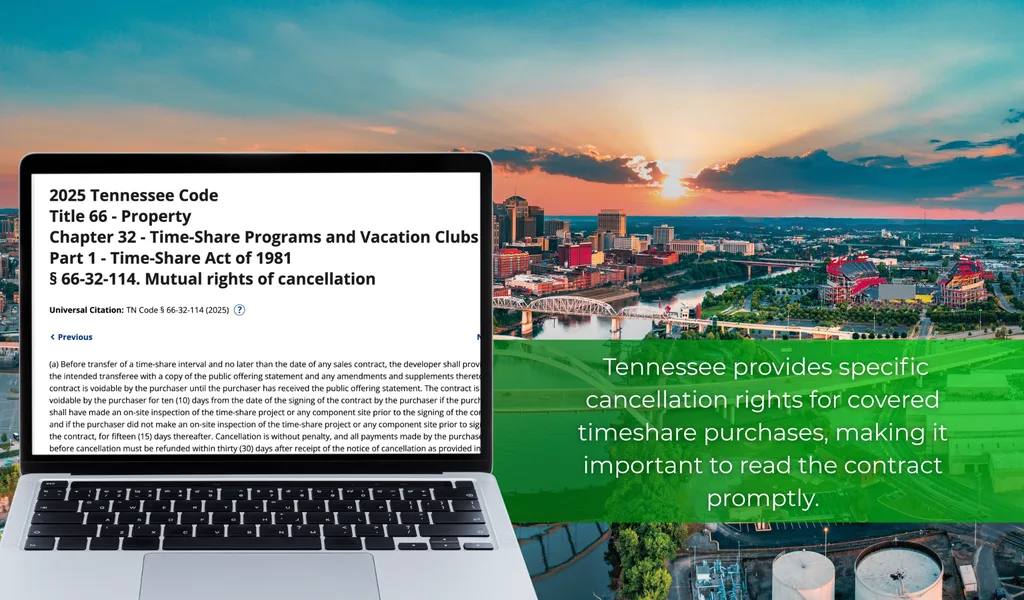
Travelers buying a covered timeshare under Tennessee law have statutory cancellation rights.
Under Tennessee’s Time-Share Act, a purchaser who made an on-site inspection of the timeshare project or a component site before signing generally has 10 days from signing to cancel. If the purchaser did not make an on-site inspection before signing, the statutory period is 15 days.
The law provides for cancellation without penalty during the applicable period and sets out ways notice may be delivered.
This is why buyers should read their paperwork immediately rather than filing it away until after the vacation. Check the cancellation provision, where notice must be sent and which deadline applies to your transaction.
Do not assume something you read about timeshare cancellation in Florida, Nevada or another state applies to a Tennessee purchase. Rights can depend on jurisdiction and the circumstances of the transaction.
Anyone uncertain about an individual contract or legal obligation should seek qualified legal advice. General consumer information cannot determine the rights attached to a specific agreement.
How should owners verify unexpected timeshare calls?
Long-term ownership can also attract attention from people outside the vacation club.
An owner may receive an unexpected call about renting unused points, reselling an ownership, transferring it or getting out of a contract. The caller may know the resort name or other details, making the conversation sound credible.
Those details are not enough to establish who is calling.
An established vacation club should give owners somewhere authoritative to check. Club Wyndham, for example, publishes verified corporate safety reviews for timeshare owners through its Scambusters resource, where owners can find information about suspicious resale, rental, cancellation, transfer and relief approaches.
The value of a resource like this goes beyond identifying individual schemes. It demonstrates a broader form of corporate transparency: acknowledging risks that exist around the category, educating owners about them and providing official channels through which suspicious contact can be checked.
Owners should still carry out their own verification. If somebody contacts you unexpectedly, find the company’s official website independently and contact the business through a channel you know is genuine.
Be particularly cautious about guarantees of a quick sale or contract exit, substantial advance charges and instructions to stop paying contractual obligations. These are among the warning signs identified in federal consumer guidance on timeshare resale and exit schemes.
What makes a vacation club transparent?
Resort photographs can tell you where you might vacation. They tell you very little about what it will be like to remain an owner.
For a long-term travel product, transparency is part of the experience.
Look for a provider that makes it reasonably straightforward to understand the basics of ownership. Can owners find information about reservations and points? Are official customer-service channels easy to identify? Is there guidance for changing circumstances? Does the company address risks facing owners rather than pretending those risks do not exist?
Club Wyndham offers a useful example of how an established vacation ownership business can approach this responsibility. As part of Travel + Leisure Co., it operates within a company with deep roots in the vacation ownership category, while its owner-facing resources extend beyond destination inspiration into practical education and support.
That does not mean every owner will have the same experience or that questions and complaints never arise. No major travel business can credibly make such a promise. What matters is whether consumers have clear routes for finding information, asking questions and resolving legitimate concerns.
Transparency is most valuable when it continues after the sale.
What happens if vacation ownership stops fitting your life?

A vacation club might fit perfectly at 40 and feel very different at 65.
Families change. Work becomes more or less flexible. Children leave home. Retirement can create more freedom to travel, or health and finances can make travel less practical.
Prospective owners should therefore ask about the end of the relationship before beginning it.
Does the provider have an official surrender or exit route? Are there eligibility requirements? Can ownership be transferred? What happens if money is still owed?
Federal consumer guidance recommends contacting the timeshare developer or resort management company directly before paying a third party to help sell or exit an ownership. That first conversation may reveal options an owner did not know existed.
This is another area where established providers can distinguish themselves through education. A company prepared to explain both how ownership begins and what legitimate options may exist when circumstances change gives consumers a more complete picture of the commitment.
Is a Nashville timeshare or vacation club right for you?
Vacation ownership is not automatically right or wrong for every traveler.
It tends to make more sense to evaluate it as a lifestyle product.
- Do you travel regularly?
- Do you enjoy planning vacations ahead?
- Does the resort network contain destinations you genuinely want to visit?
- Can you comfortably manage the initial and recurring costs?
- Have you tested how the points and reservation system would work for your typical trips?
Then look at the company behind the product.
Longevity in the category carries weight, but so does what a provider does with that experience.
Clear ownership information, accessible support, consumer education and resources addressing difficult subjects such as suspicious resale or exit approaches can tell prospective buyers something about how the relationship is likely to function beyond the sales presentation.
Nashville may give you plenty of reasons to come back.
Whether a timeshare or vacation club should become part of those future trips is a separate decision, and one worth making with the same care you put into planning the vacations themselves.