
A lawn that nobody wants to walk on stops being a lawn and starts being empty square footage. That is what happens in many Taylor backyards by mid-July, once mosquitoes claim the shady edges of the yard and everyone retreats indoors after dinner rather than sitting outside or letting the kids play barefoot on the grass.
What looks like a pest problem is usually also a lawn problem hiding in plain sight, because the two rarely show up separately. Damp soil, clogged rain gutters, areas that retain puddles of water even when they dry, and overgrown edges are a mosquito’s ideal environment and the lawn’s greatest stressors.
A yard that has difficulty draining, getting rid of excess water, or trimming the edges becomes a home to mosquitoes for the summer months, and one in which the lawn itself is stressed before any biting takes place.
This article will detail the connection between these two conditions and how professional mosquito control benefits lawns in Taylor more than people realize.
1. Fixing Drainage Problems Protects The Turf
The first step in an effective mosquito treatment in Taylor should be to evaluate the locations of water around a property, rather than moving straight into the spraying process. Most technicians will inspect the property by walking around and looking for gutters, low-lying bedding, tarp covers, and drainage channels before spraying, as these are where the larvae grow.
Addressing these breeding sites by improving drainage and grading, cleaning the gutters, and eliminating any standing water is also exactly what a lawn needs to be healthy and not have saturated soils.
2. Reducing Standing Water Reduces Lawn Disease
This overlap isn’t an accident. Mosquito larvae breed extensively in stagnant water in yards due to spring rains, and eliminating this water is the only effective way to reduce their numbers in your local area.
Mosquito larvae only require minimal water for breeding, so any small wet spots that remain unaddressed are enough to maintain a breeding population throughout the season. The very same moisture that leads to dampness and a lack of oxygen in the soil is responsible for turf diseases and shallow grass roots, making lawns that stay wet susceptible to discoloration and thinning spots later on.
3. Catching Hidden Breeding Sites Protects Whole Yard
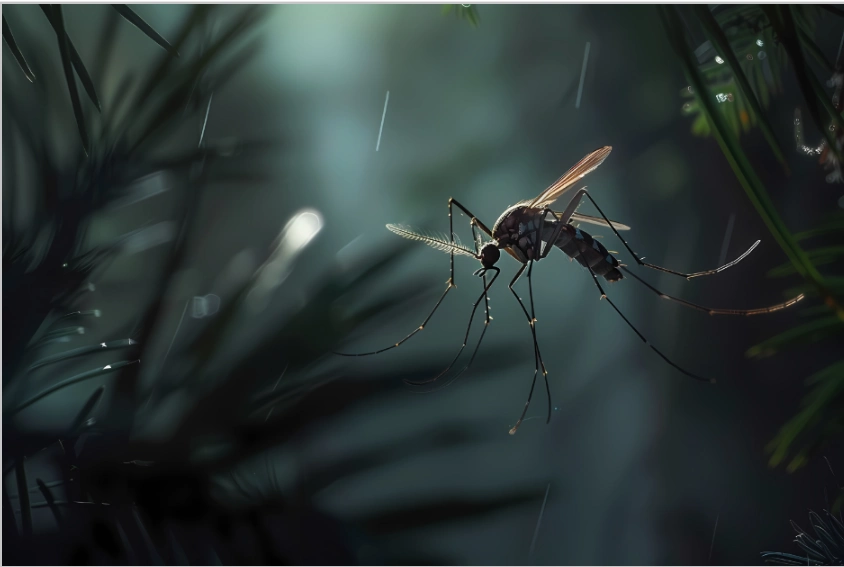
Taylor is no hypothetical risk zone. In particular, the Asian tiger mosquito, a species that can spread diseases such as dengue fever and chikungunya, was identified in an industrial zone in Taylor.
Unlike the usual backyard mosquitoes, this type breeds in small containers rather than open water, so garbage caps, gutters, toys turned upside down, and garden planters can create a colony in a yard that seems dry.
4. Clearing Overgrown Edges Strengthens Grass Underneath
Barrier applications use the same reasoning in areas where adult mosquitoes roost during the daytime rather than in their breeding areas. Technicians apply barrier treatments to the undersides of shrubs, grass growing around fence lines, and shaded mulch areas because that is where mosquitoes rest until dusk, but one has to clear any overgrowth to access them.
Keeping the edges of the lawn neat and the grass even ensures there are no hiding places for mosquitoes. This is the standard advice on how to take care of lawns anyway, since uneven grass growth creates weak lawns.
5. Targeted Treatment Protects Soil Biology a Lawn Needs
The type of treatment matters as much as the fact that treatment happens at all. The Environmental Protection Agency’s guidance on integrated mosquito management favors combining source reduction, like eliminating standing water, with targeted larvicides and adult treatments only where needed, rather than broad, repeated spraying across an entire property.
That approach protects the soil microorganisms and beneficial insects that grass depends on far better than repeated general-purpose spraying done out of frustration. Homeowners managing mosquitoes on their own often buy multiple rounds of fogger or granule products over a summer, applied without precision since there is no easy way to know which spots are actually breeding sites. One professional visit at the right rate typically uses less product overall than several rounds of guesswork.
6. Removing Health Risk Keeps Families Using Lawn
The health stakes behind all of this are real, even if West Nile virus feels like a distant headline most summers. National case counts reported through the CDC’s ArboNET surveillance system reached the hundreds by early September in recent seasons, with a meaningful share of those classified as the more serious neuroinvasive form of the disease.
Mosquito activity in a yard is the same as that public health officials track on a larger scale, which is why reducing it locally carries real weight. A lawn nobody will use because of that risk stops getting the everyday attention that keeps it healthy, since it stops being mowed, edged, and walked across enough for anyone to notice a thinning patch or a low spot that pools water.
Conclusion
None of this replaces basic lawn care like mowing height, fertilization, aeration, or mosquito control. What it does is remove one of the more common reasons a Taylor lawn gets neglected during the very months it needs the most attention, while addressing the same moisture and vegetation issues already on a lawn care checklist.
A yard comfortable to sit in gets mowed and walked across enough that small problems get noticed early, while a yard where mosquitoes have taken over tends to get avoided until those problems have spread. A lawn that stays usable through August tends to get cared for through August, which is the simplest way mosquito treatment and turf health can end up working toward the same result.