
Step out of your car in certain towns and the scent of hay and leather hits you right away. Barns sit close to the county roads, and trucks pulling horse trailers crowd the local gas stations. Horse country has a natural charm that goes beyond typical real estate worries like square footage or school districts.
Nashville borders these rural spots so closely that visiting is incredibly easy. If you read the Wavy Nashville guide on walking and biking, you learn how fast the local scenery shifts. Their main guide handles the downtown details perfectly. However, if you drive just twenty minutes south, the tall city buildings disappear entirely. Almost instantly, split rail fences and wide green pastures take over the view.
Six Towns Where Horses Set the Pace
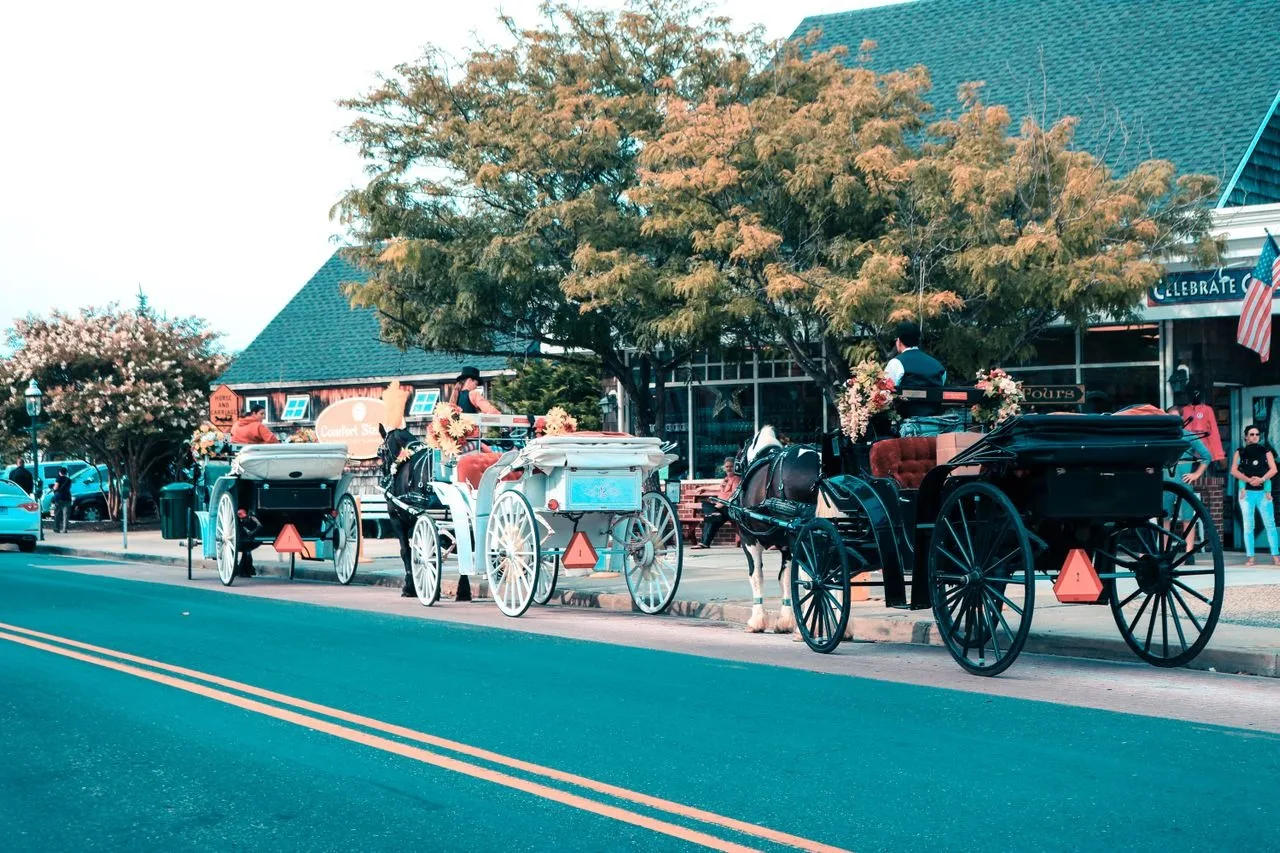
Image link: https://www.pexels.com/photo/horse-carriage-on-road-1461377/
There is no exact recipe for a true horse town. A few grew from racing fortunes or old hunt clubs, while others simply have great grazing soil. Instead of typical suburban neighborhoods, these communities share a lifestyle focused entirely on barns and wide pastures. Because of these unique backgrounds, every town mentioned here deserves its place on our list.
Leiper’s Fork and Franklin, Tennessee
Leiper’s Fork barely counts as a town. A few hundred people live there, tucked along the Natchez Trace where the road narrows and the speed limit drops without anyone needing to be told twice. Front porches still function as gathering spots. Musicians who could sell out arenas show up unannounced to pick guitars at the local market, and nobody makes a scene about it.
Franklin, just up the road, is the more livable version of the same idea. Downtown has the antebellum storefronts and Civil War history that pull in day trippers, but drive a few miles out and the horse farms start showing up. Williamson County has some of the highest land values in Tennessee, and a fair chunk of that comes from people who wanted a barn and a paddock within thirty minutes of an airport. Readers who’ve worked through Wavy Nashville’s downtown bucket list already have a feel for how fast this part of the state shifts from urban to rural.
Lexington, Kentucky
Nobody argues much about Lexington’s claim to the title. This is bluegrass country, literally, where the limestone under the soil is supposed to build stronger bone in young horses, and the racing world treats that as gospel. Keeneland’s fall and spring meets pull crowds who dress like it’s a wedding, and the surrounding farms, some of them centuries old, run right up to the edges of neighborhoods.
Living there means accepting that horses come up in casual conversation the way weather does everywhere else. Real estate agents will mention barn square footage before they mention garage space. That’s just how the market works when a decent share of buyers are looking to board or breed, not just admire the view.
Ocala, Florida
Ocala gets called the horse capital of the world almost as often as Lexington does, and the two towns have been quietly competing over that title for decades. The soil here is different, sandier, gentler on joints, which is part of why so many training operations moved south. The World Equestrian Center changed the town’s profile almost overnight, bringing in year round competitions and the kind of hotel and restaurant development that tends to follow big events.
What Ocala offers that a lot of horse towns don’t is affordability, at least relative to Wellington or Middleburg. Acreage still comes at a reasonable price if you’re willing to be a little outside town, and the winters stay mild enough that turnout schedules barely change season to season.
Aiken, South Carolina
Equestrians have wintered in Aiken since the 1890s, escaping frozen northern grounds to train their horses down south. Thanks to these early visitors, the town features plenty of polo fields and steeplechase courses. Even today, the local downtown proudly keeps a slow and relaxed pace.
The Hitchcock Woods, a massive urban forest laced with sand trails, might be the town’s best kept secret. Riders use it daily and it costs nothing to enjoy, which says something about the culture here. Aiken never quite went full resort town, and locals seem to like it that way.
Loxahatchee and Wellington, Florida
Every winter, the polo and show jumping world more or less relocates to this stretch of Palm Beach County. Wellington gets most of the attention, thanks to the Palm Beach International Equestrian Center and the money that follows it, but Loxahatchee next door offers the acreage and the quieter pace that a lot of serious riders actually want once show season wraps up.
Anyone weighing a move should look at what’s currently listed through Tricoli Team’s Loxahatchee real estate page, since inventory in this pocket of Florida shifts fast during season and slows down considerably by summer. Buyers who wait too long into the fall often find themselves competing against trainers scrambling to secure a barn before the circuit starts back up.
Middleburg, Virginia
Locals simply call Middleburg hunt country. Located about an hour outside Washington DC, the town keeps its fox hunting traditions alive. Steeplechase races still gather well-dressed crowds. This small, walkable community proudly rejects chain stores. Outside of town, stone walls and wooden fences line narrow country roads that have not changed since horses were the main form of travel.
It’s an expensive place to buy into, no question. Proximity to Washington keeps prices high even on modest properties. But for people who want the East Coast version of horse culture, with its formality and old money undertones, nothing else quite matches it.
Picking one that actually fits
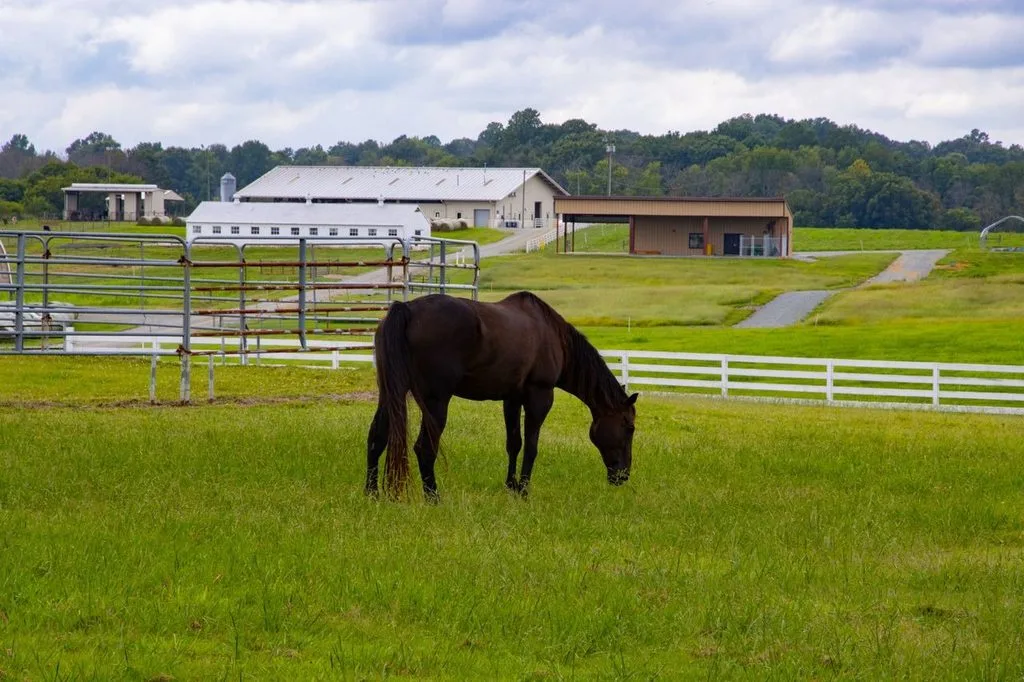
None of these towns work the same way. Lexington and Ocala lean toward the professional side of the horse world, with breeding operations and training barns driving the local economy. Aiken and Middleburg feel older and quieter, more about tradition than competition. Wellington and Loxahatchee run hot in winter and empty out by June. Franklin and Leiper’s Fork split the difference, close enough to a real city that you never feel cut off, rural enough that a horse trailer in the driveway doesn’t raise eyebrows.
The right fit probably comes down to whether horses are a hobby, a business, or something in between, and how much distance from an airport or a hospital actually matters on an average day. Visiting first, ideally during a slow season rather than a big event weekend, tends to tell people more than any listing photo ever could.