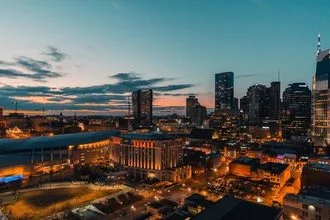
The East Bank of the Cumberland River is currently a mix of concrete, cranes, and organized chaos. When you stand across the river and watch the new stadium rise, you’re not just looking at a future entertainment venue. You’re watching one of the most complex logistical puzzles in modern construction being solved in real time.
Replacing a massive structure requires an incredible synchronization of design and muscle.
Designing the Enclosure
The vision for the new stadium is a radical departure from its open-air predecessor. The architectural blueprint prioritizes an enclosed, weather-protected environment that looks less like a spaceship and more like an extension of a Nashville neighborhood.
Enclosing a stadium of this magnitude changes the entire structural math.
Engineers aren’t just designing for a football game. They are designing a roof system capable of supporting thousands of tons of steel and heavy rigging for major winter concerts. Moving from an open bowl to an enclosed arena means installing massive commercial HVAC networks to manage the climate for tens of thousands of people. Heat rises in a sealed environment. Pushing cold air down to the lower seating levels requires industrial chillers and massive ductwork hidden within the ceiling structure.
The foundation alone requires extensive earthwork alongside the river to anchor a footprint spanning millions of square feet. Building next to a major waterway means dealing with a high water table. Construction crews must drive deep pile foundations down into the bedrock to ensure the building remains stable in soft, river-adjacent soil. Every structural element must account for weather, capacity, and the unique soil conditions of the East Bank.
A City-Sized Workforce
Who actually builds a structure this large? On any given day, the site operates like a small city, requiring thousands of hands on deck simultaneously.
Contracting with Superior Skilled Trades allows project managers to systematically mobilize heavy equipment operators for the early phases, followed by hundreds of specialized welders, pipefitters, and electricians as the structure rises. Coordinating this human engine means managing shift changes, specialized certifications, and the continuous ebb and flow of different trades.
Construction sequencing is incredibly strict. The concrete crews must finish their pours before the steel erectors can begin framing. The HVAC technicians can’t run their ductwork until the ironworkers secure the structural grid. Once a system is installed, it can’t simply be covered up. City inspectors must verify that every electrical panel and plumbing line meets commercial code before the drywallers are allowed to close the walls. If one trade falls behind schedule or fails an inspection, the entire project timeline shifts.
Is the local talent pool enough? Usually not. The hurdle of securing this much specialized manpower in a tight local market often requires pulling in expert tradespeople from across the country to keep the timeline from slipping.
Downtown Delivery Logistics
Delivering the materials for a stadium into the heart of a bustling tourist city without gridlocking the local commute is a difficult undertaking. The site requires millions of pounds of concrete, massive steel beams, and heavy cranes that must be assembled on location.
Tower cranes don’t just arrive ready to work. They are delivered in sections and assembled on site using mobile cranes. As the stadium grows taller, the tower cranes actually build themselves higher by inserting new mast sections into their own base.
Deliveries of oversized materials are often scheduled for the middle of the night to avoid peak traffic hours. The staging areas around the footprint have to be mapped out perfectly. A delayed steel delivery can’t block the path of the concrete mixers. Concrete has a strict time limit once it leaves the plant. It must be poured before it begins to set. Trucks need immediate access to the site without getting stuck behind downtown traffic.
Heavy machinery operates on a strict grid, moving materials from the staging ground to the active build zone. This relies on just-in-time delivery principles. Materials arrive exactly when they are needed for installation rather than sitting on site, taking up valuable real estate. It’s a continuous, rolling supply chain functioning amidst the existing daily traffic of downtown Nashville.
How Software Keeps the Site Safe
How do you manage risks hundreds of feet in the air? The modern construction process relies heavily on digital oversight to keep the physical work on track.
Project managers use advanced digital modeling to track daily progress and compare it against the architectural plans. This is known in the industry as building information modeling. Before a single pipe is fitted, digital clash detection identifies if an electrical conduit will intersect with a structural beam. This prevents expensive rework on the actual site.
Up-to-the-minute weather monitoring is critical when you have cranes lifting steel beams high above the ground. A sudden gust of wind off the Cumberland River can turn a suspended steel beam into a massive hazard. Crane operators rely on digital anemometers in their cabins to know exactly when wind speeds exceed safe lifting limits.
Modern site management software ensures that personnel are accounted for and that heavy machinery operators have the data they need to navigate the site safely. Supervisors track safety certifications and daily briefings on digital tablets. Fall protection protocols dictate exactly when and where workers must tie off their harnesses to structural anchors. Digital logs ensure these safety measures are documented and enforced across every single shift.
What This Means for Travelers
For visitors and locals, the construction chaos will eventually give way to a brand-new era of entertainment. The enclosed design and increased capacity mean Nashville will be able to host year-round events that the old stadium couldn’t support. This ranges from Super Bowls and Final Fours to the biggest winter concert tours.
The venue will become a permanent fixture on the national touring circuit. But the stadium isn’t just an isolated venue. It’s the anchor for a broader revitalization of the East Bank.
The surrounding area is being developed to host community activities and create a brand new district for people to gather. Urban planners are designing this footprint to integrate seamlessly with the existing pedestrian flow and local transit networks. It’s designed to be a destination even on days when there isn’t a game or a show. New infrastructure will eventually connect the stadium village directly to the downtown core. Watching this structure rise changes how you see the city’s future. When kickoff day finally arrives, that concrete and steel will officially become Nashville’s newest destination.