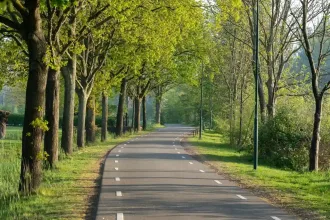
The Upstate region of South Carolina — anchored by Greenville and Spartanburg, and stretching north into the Blue Ridge foothills — draws visitors year-round for waterfalls, state parks, scenic byways, and outdoor recreation. The roads through this region are among the most rewarding drives in the Southeast, but they also require a different approach than flat interstate driving.
For drivers making the trip for the first time, or even returning visitors unfamiliar with mountain driving tips and techniques, a few specific habits make the experience safer for everyone on the road. It also helps to know what happens after a crash in Greenville and the rest of the Upstate before you set out.
What Makes Mountain and Foothill Roads Different
The roads leading into and through Upstate SC — including SC-11 (the Cherokee Foothills Scenic Highway), US-276 toward Caesars Head State Park, and the roads through Table Rock and Jones Gap — combine sharp curves, elevation changes, blind corners, and narrow lanes in ways that highway driving doesn’t prepare most drivers for.
Key differences from flat-road driving:
- Curves don’t announce themselves — on mountain roads, a straight section can end in a tight curve with little visual warning. Speed should be adjusted before entering a curve, not during it
- Grade affects braking — downhill driving at speed requires significantly more braking distance than level road. Riding brakes too hard on descents overheats them and can cause brake fade
- Oncoming traffic in curves — two vehicles meeting in a blind curve on a narrow road requires both drivers to be in their lane and at a speed that allows correction
- Wildlife and pedestrians — deer, cyclists, and hikers are common on Upstate roads, especially near state parks and at dawn and dusk
Driving SC-11: The Cherokee Foothills Scenic Highway
SC-11 runs along the base of the Blue Ridge from Gaffney to the Georgia border, passing through Cowpens, Chesnee, and the communities near Table Rock and Oconee State Parks. It’s one of the most beautiful drives in the state and one of the most trafficked by visitors unfamiliar with its character.
- The speed limit varies along SC-11 — pay attention to posted signs, which change through communities and near school zones
- Farm equipment, horse trailers, and slow-moving vehicles are common — leave plenty of following distance and pass only in marked passing zones
- Weekend traffic is significantly heavier than weekday traffic — fall foliage season (mid-October through early November) brings the highest visitor volumes of the year
Handling Steep Descents Safely
The descent from Caesars Head on US-276 is one of the steeper sustained grades in the Upstate. Drivers not accustomed to mountain descent technique sometimes overheat their brakes on this stretch.
- Shift to a lower gear before beginning a long descent — using engine braking reduces reliance on the brake pedal
- Apply brakes firmly but briefly rather than riding them continuously — this allows the brakes to cool between applications
- If brakes feel soft, spongy, or less responsive, pull over at a safe location and allow them to cool completely before proceeding
- Vehicles towing trailers should reduce speed significantly before descents and use transmission braking aggressively
Weather and Road Conditions in Upstate SC
The elevation difference between the foothills and the valleys means weather can vary significantly within short distances. The road at Table Rock’s summit can be icy when Greenville’s downtown is dry and above freezing.
- Check weather at elevation, not just at the destination city — SCDOT’s 511 service and the National Weather Service office in Greenville-Spartanburg provide current road and weather conditions
- Waterfalls and stream crossings along scenic routes can cause roadway moisture that freezes before surrounding pavement
- Fall leaves that look picturesque on a dry day can create a slick surface equivalent to ice when wet — reduce speed on leaf-covered curves
After an Accident on Upstate Roads
Cell coverage in parts of Upstate SC and along the Blue Ridge foothills can be limited. If involved in a crash in a low-coverage area:
- Try 911 first — emergency calls sometimes connect on networks that won’t support regular calling
- If unable to reach emergency services, send a passenger on foot toward the nearest developed area
- Photograph the scene thoroughly before vehicles are moved
South Carolina’s statute of limitations for personal injury is three years. Anyone injured in a crash caused by another driver’s negligence on Upstate roads has the right to pursue compensation for medical expenses, lost income, and other damages.
Final Thoughts on Driving Upstate South Carolina
The Upstate rewards drivers who slow down and plan ahead. Adjusting speed before curves, using lower gears on long descents, checking the weather at elevation and leaving extra room for farm equipment and wildlife cover most of the risk on these roads. If something does go wrong, a well-documented scene makes the next steps easier. Wavy Nashville readers planning a road trip east to Greenville and the Blue Ridge foothills can keep these tips handy for the drive.