
A blank wall is the cheapest home upgrade nobody thinks about. You can spend thousands on a new sofa or a kitchen refresh, and the room still feels unfinished if the walls are empty. The global wall art market is on track to nearly double by the early 2030s, and that growth isn’t random. People are realizing that art does more for a room’s personality than almost anything else you can buy.
This guide walks through both sides of the DIY wall art equation: smart pieces to buy for tricky spaces, and hands-on projects you can make yourself. Whether you’re staging a house for sale or just tired of staring at bare drywall, there’s a practical fix here.
Why Wall Art Is the Highest-ROI Home Refresh You’re Not Doing
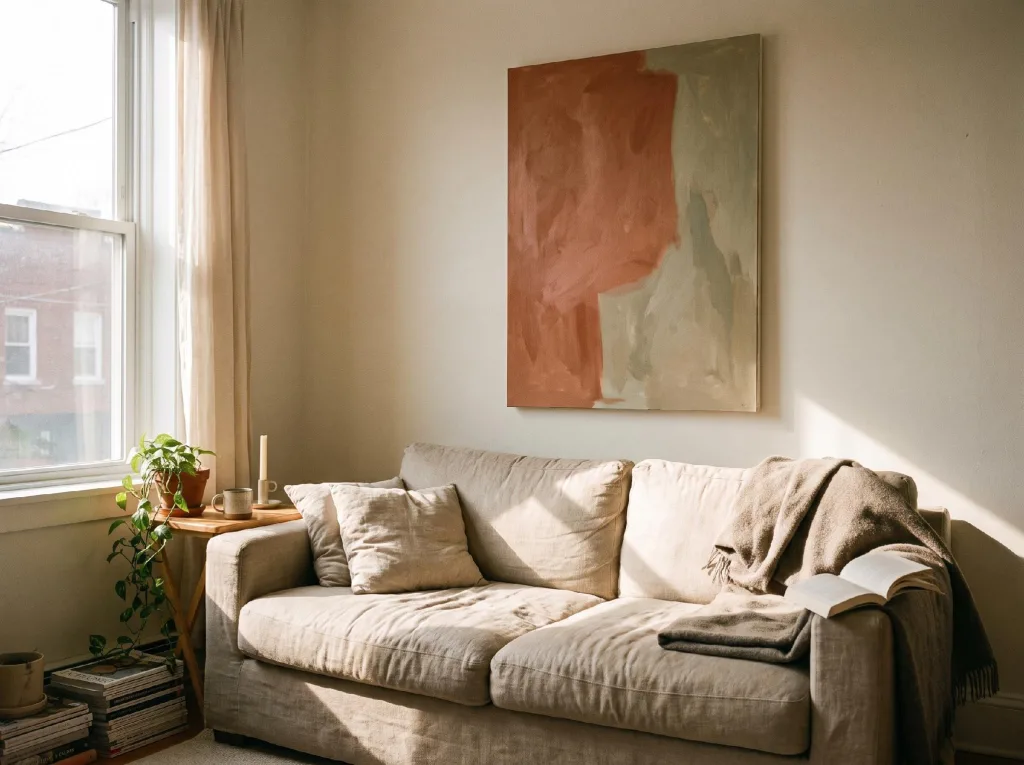
Wall decor isn’t just about looking nice for guests. According to the National Association of Realtors’ 2025 Profile of Home Staging, nearly 3 in 10 real estate agents (29%) said staging, including wall decor, led to a 1% to 10% increase in the dollar amount of offers on a home. On a $400,000 house, that’s a potential swing of $4,000 to $40,000 just from how a space is presented.
The same NAR report found living rooms are the single most important room to stage, with 37% of agents ranking it their top priority, followed closely by the primary bedroom at 34%. Both are exactly the kind of rooms where a large piece of art above a sofa or bed makes the biggest visual impact. If you’re going to spend money on one home improvement this year, the walls in these two rooms are where it pays off fastest.
That’s especially true in awkward spots that a standard framed print can’t fix. Every house has them: the skinny strip of wall beside a doorway, the stairwell that climbs three stories, the entryway hallway that’s four feet wide and eight feet tall. The simplest fix is to stop fighting the wall’s shape and work with it. A vertical painting is built for exactly this problem. Portrait-orientation pieces fill a tall, narrow space the way a landscape-format piece never can, without leaving awkward gaps of blank wall on either side.
Solving the Narrow Wall Problem
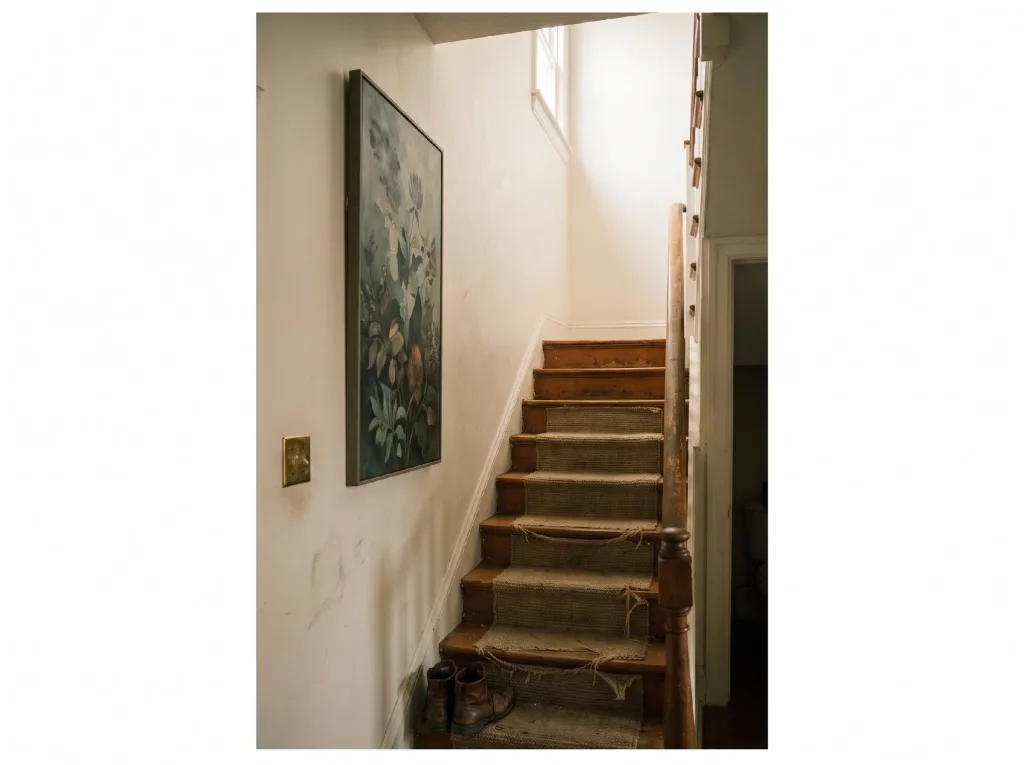
Square frames look wrong in narrow spaces, and design writers have been pointing this out for years: tall, narrow spaces call for a different approach than the standard living room arrangement, favoring elongated or gridded compositions over wide horizontal spreads. Hang a tall piece in a stairwell, and it draws the eye upward instead of getting lost. Hang one beside a front door, and it turns a transitional space into a moment worth noticing.
This isn’t a niche fix either. Narrow walls show up in nearly every home style, from older houses with chopped-up floor plans to new-construction hallways designed for efficiency over drama. A tall, thin canvas solves a layout problem that a coffee table book of design tips usually can’t.
Building Your Gallery Wall Layout
Once you’ve got a plan for the tricky spots, the rest of the wall becomes a layout exercise. Start by tracing your frames on kraft paper and taping the paper to the wall before you drive a single nail. This lets you rearrange freely without patching holes.
A few habits keep a gallery wall from turning into visual clutter:
- Pick one piece as the anchor, usually the largest or boldest, and build the rest of the arrangement around it.
- Mix vertical and horizontal formats rather than sticking to one orientation throughout.
- Leave 2 to 3 inches between frames so the eye can separate individual pieces.
- Hang the center of the arrangement at eye level, roughly 57 to 60 inches from the floor.
- Limit yourself to 2 to 3 frame finishes (wood, black, gold) so the collection reads as curated instead of random.
Apartment Therapy’s gallery wall formula is one of the most-cited references for spacing and layout, and it holds up because the underlying logic doesn’t change: consistent gaps and a clear focal point make an arrangement feel intentional, even when the individual pieces are eclectic.
Making Your Own DIY Wall Art: The Rise of Paint-by-Numbers
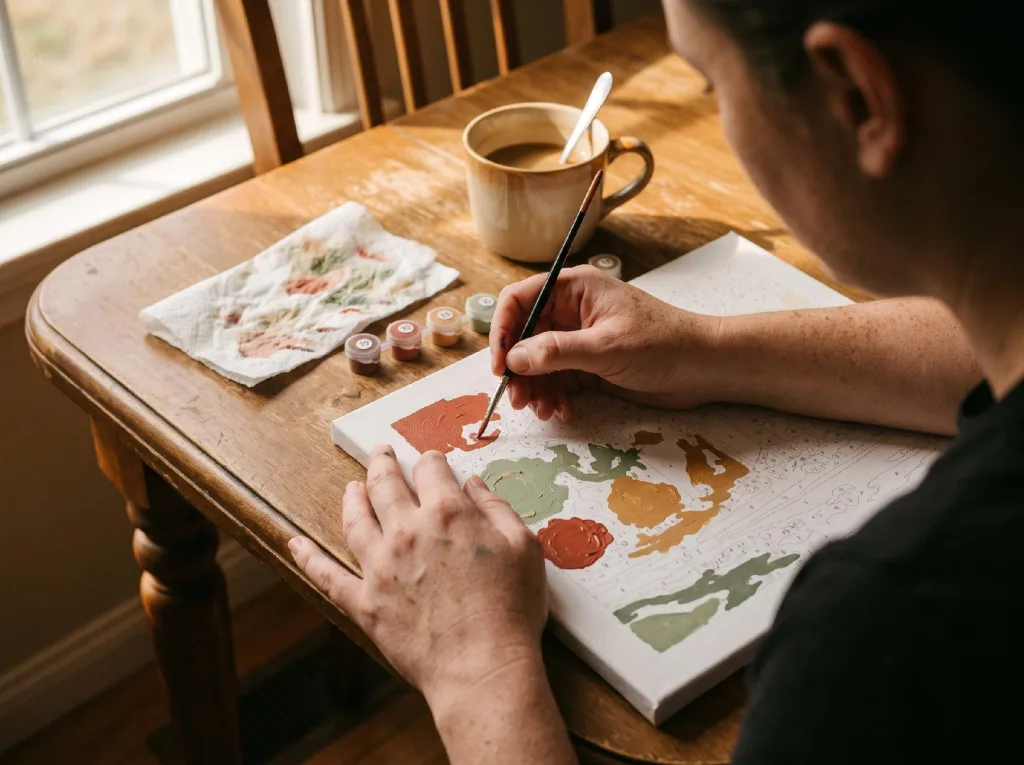
Buying art solves half the problem. The other half is making something that’s actually yours, and paint-by-numbers has quietly become the go-to answer for that. Custom, photo-based kits, think weddings, pets, or a favorite vacation photo, are shaping up as the top personalization trend heading into 2026, according to market research firm Accio. A generic landscape kit is one thing; a canvas made from your own wedding photo is a keepsake that also solves your blank-wall problem.
There’s a wellness angle here too, and it’s backed by more than marketing copy. A 2025 American Psychiatric Association poll found 46% of Americans use creative activities, including hands-on painting, to relieve stress or anxiety, and people with better self-rated mental health reported engaging in creative activities more often. A 2025 scoping review published in Issues in Mental Health Nursing went further, finding that people who engage in creative hobbies report significantly lower depression and anxiety, along with higher mental health quality-of-life scores, than people without a hobby.
That combination, a personalized finished product plus a genuinely relaxing process, is why paint by numbers kits for adults have moved well past the “kids’ craft table” reputation they used to have. A custom kit built from a photo you already love gives you a weekend project that ends with a piece worth framing, not a half-finished canvas shoved in a closet.
Choosing a Color Palette and Theme That Lasts
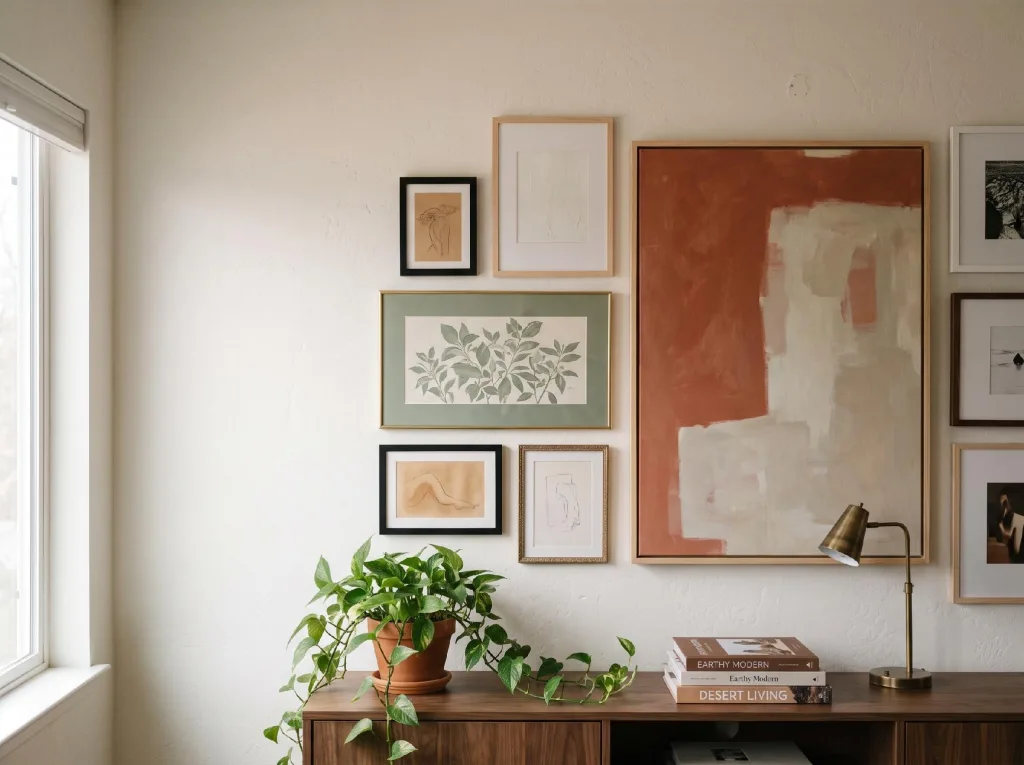
Whether you’re buying a vertical piece or hand-painting a custom kit, the choice of palette matters more than people expect. Earthy neutrals, terracotta, sage green, warm sand, have held their place as the best-selling wall art palette heading into 2026, and for good reason: they don’t fight with existing furniture the way a trendy jewel tone can.
Pick 2 to 3 complementary tones before you buy or paint anything, and stick to them across every piece on that wall. A DIY paint-by-numbers canvas in warm terracotta will sit comfortably next to a purchased vertical painting in the same tonal family, even if the subjects are completely different. Consistency in color is what makes a mixed collection of bought and homemade art look pulled together instead of accidental.
Bringing It All Together
A blank wall isn’t a design failure; it’s an opportunity that’s easy to put off. The good news is you don’t need a big budget or a design degree to fix it. A tall, narrow hallway gets solved with the right vertical piece. A living room that needs personality gets a weekend and a paint-by-numbers kit instead of another trip to a big-box store.
Start with one wall. Pick the problem spot that bothers you most, whether that’s the stairwell that’s felt empty for two years or the stretch above the couch that’s been waiting for something. Either buy smart or spend a weekend painting, and you’ll end up with a home that feels finished instead of unfinished, and a project you actually enjoyed making.